|




Click the flag
Meet our special
U.S. Publishers
|
Executive
Function & Self-Regulation
Featured
Books in this Category / Main
Booklist / Challenging Behaviour Index

Featured
Books
|
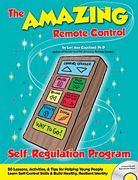
The Amazing Remote Control Self-Regulation Program. Lori Ann Copeland, $63.95 (Grades 2-6)
This companion guide with CD provides a series of 10
lesson topics with more than 50 activities and handouts to help children learn
self-regulation and impulse control skills. The program features fun and
memorable lessons with activities that teach concepts and skills children can
apply to their day-to-day lives. These lessons can be presented to children in
classrooms and small groups or to individuals who may need more intensive help
with self-control issues. The accompanying CD contains printable handouts. The Amazing Remote Control Self-Regulation Program is the companion
guide to the Hunter and His Amazing Remote Control storybook. |
|
ASANAS for Autism and Special Needs: Yoga to Help
Children with Their Emotions, Self-Regulation and Body Awareness. Shawnee
Thornton Hardy, $19.95
This how-to handbook gives parents, teachers, and yoga
instructors step-by-step instruction to teach yoga poses to a child with autism
or other special needs. They will learn how to teach yoga in a fun and
interactive way using games and activities with numerous benefits to the child
from teaching body parts to emotional and sensory regulation.
Breaking down yoga instruction pose by pose, body part by
body part, breath by breath, this book uses easy-to-understand language and
clear photographs to show parents, teachers, yoga instructors, and other
professionals how to introduce the life-long benefits of yoga to a child with
special needs. These benefits include gaining greater awareness and
understanding of the body, learning to self-regulate the nervous system, and
developing coping skills to work through difficult emotions such as anger and
anxiety. Creative yoga games, activities, relaxation exercises, and chair yoga
poses are included to make learning yoga a fun, interactive, and calming
experience for children with a wide range of abilities. |
|
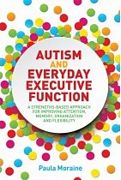
Autism and Everyday Executive Function: a
Strengths-Based Approach for Improving Attention, Memory, Organization, and
Flexibility. Paula Moraine, $30.95
Understand and support executive function in individuals
with Autism Spectrum Disorder (ASD) with this fully-explained, innovative
model. Showing how to use an individual's strengths to address executive
functioning weaknesses, this approach will also help to build a strong
foundation for social and communication skills.
Advocating a person-centred approach, the author describes the importance of
identifying the individual's preferred style of engagement and communication,
and how sensory experiences impact their thoughts, feelings, and actions. She
explains how to use this information to identify the individual's strengths and
weaknesses across eight key areas which are the building blocks of executive
functions: attention; memory; organization; time management; initiative;
behavior; goal setting and flexibility. These areas can be used daily to
establish predictability and offer a foundation for interpreting, processing and
understanding the world with flexibility. Professionals and parents can also
use them as the basis of an Individualized Education Plan (IEP), or to create
personalized interventions and support at school or at home. |
Back to top
|
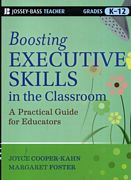
Boosting Executive Skills in the Classroom: a Practical
Guide for Educators, Grades K-12. Joyce Cooper-Kahn & Margaret
Foster, $35.95
Students with weak Executive Function
skills need strong support and specific strategies to help them learn in an
efficient manner, demonstrate what they know, and manage the daily demands of
school. This book shows teachers how to do exactly that, while also managing
the ebb and flow of their broader classroom needs. From the co-author of the
bestselling parenting book LATE, LOST, AND UNPREPARED, comes a compilation
of the most practical tools and strategies, designed to be equally useful for
children with EF problems as well as all other students in the general
education classroom.
Rooted in solid research and
classroom-tested experience, the book is organized to help teachers negotiate
the very fluid challenges they face every day; educators will find strategies
that improve their classroom "flow" and reduce the stress of
struggling to teach students with EF weaknesses. |
|
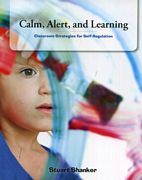
Calm, Alert, and Learning:
Classroom Strategies for Self-Regulation. Stuart Shanker, $67.00 
Recent research tells us that one of the
keys to student success is self-regulation — the ability to monitor and modify
emotions, to focus or shift attention, to control impulses, to tolerate
frustration or delay gratification. But can a child’s ability to self-regulate
be improved?
Canada’s leading expert on
self-regulation, Dr. Stuart Shanker, knows it can and that, as educators,
we have an important role to play in helping students’ develop this crucial
ability. Distinguished Research Professor at York University and Past President
of the Council for Early Child Development, Dr. Shanker leads us through an
exploration of the five major domains — what they are, how they work, what they look
like in the classroom, and what we can do to help students strengthen in that
domain. |
|
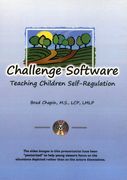
Challenge Software: Teaching Children Self-Regulation.
Brad Chapin, $42.95 (DVD)
Challenge Software is an interactive, web-based
program for children. It utilizes animated scenarios and games to engage
children quickly and teach them the fundamental skills necessary for healthy
Self-regulation.
- 17 video scenarios
- Interactive program
- Discussion questions
- Follow-up activities
- Online resources
|
Back to top
|
Children Who Fail at School But Succeed at Life:
Lessons from Lives Well-Lived. Mark Katz, $54.00
Many people who failed in school move on to enjoy
meaningful and successful lives. They include — though they are by no means
limited to — those with attention and executive function challenges, learning
disabilities, learning and behavioral challenges arising out of traumatic
events in their lives, and even those impacted by all of the above. Up until
recently, little attention was paid to successful people who did poorly in
school. So what did we miss? How can their life experiences help educators and
parents understand what schools can do better to support students who are
struggling today?
In his groundbreaking new book, Mark Katz draws on
research findings in clinical and social psychology, cognitive neuroscience,
education, and other fields of study — as well as stories of successful
individuals who overcame years of school failure — to answer these and other
questions. In the process, he shows how children who fail at school but succeed
at life can give teachers and schools, counselors and health care professionals,
parents and guardians — even those whose childhood struggles have persisted into
their adult years — new remedies for combating learning, behavioral, and
emotional challenges; reducing juvenile crime, school dropout, and substance
abuse; improving our health and well-being; and preventing medical problems
later in life. |
|
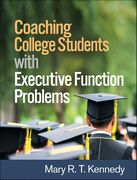
Coaching College Students with Executive Function
Problems. Mary Kennedy, $49.50
Although executive function difficulties are often
addressed in school-age children, there are few resources showing how to help
these individuals when they are older. This book presents a dynamic coaching
model that helps college students become self-regulated learners by improving
their goal-setting, planning, time management, and organizational skills. Ideal
for use with students with attention-deficit/hyperactivity disorder (ADHD),
learning disabilities, acquired brain injury, and other challenges, Mary
Kennedy's approach incorporates motivational interviewing and emphasizes
practical problem solving. User-friendly features include numerous concrete examples,
sample dialogues, and print and online resource listings. In a large-size
format for easy photocopying, the book contains 21 reproducible forms.
Purchasers get access to a Web page where they can download and print the
reproducible materials for repeated use. |
|
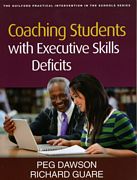
Coaching Students with
Executive Skills Deficits. Peg Dawson & Richard Guare, $55.95
This practical manual presents an
evidence-based coaching model for helping students whose academic performance
is suffering due to deficits in executive skills, including time and task
management, planning, organization, impulse control, and emotional regulation.
In just a few minutes a day, coaches can provide crucial support and
instruction tailored to individual students' needs. From leading experts, the
book provides detailed guidelines for incorporating coaching into a
response-to-intervention framework, identifying students who can benefit,
conducting each session, and monitoring progress. Special topics include how to
implement a class-wide peer coaching program. |
Back to top
|
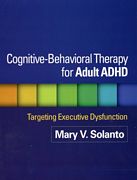
Cognitive-Behavioral Therapy for
Adult ADHD: Targeting Executive Dysfunction. Mary
Solanto, $27.50
This highly practical book provides
evidence-based strategies for helping adults with ADHD build essential skills
for time management, organization, planning, and coping. Each of the 12 group
sessions — which can also be adapted for individual therapy — is reviewed in
step-by-step detail. Handy features include quick-reference Leader Notes for
therapists, engaging in-session exercises, and reproducible take-home
notes and homework assignments. Purchasers get access to a Web page featuring
all of the reproducible materials, ready to download and print in a convenient
8 1/2" x 11" size. This edition includes the adult ADHD criteria from
DSM-5. |
|
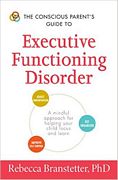
The Conscious Parent's Guide to Executive Functioning
Disorder: a Mindful Approach for Helping Your Child Focus and Learn. Rebecca
Branstetter, $18.99
If your child has been given a diagnosis of executive
functioning disorder, you may be feeling overwhelmed and unsure of what to do
next. You want your child to be able to master certain basic skills, such as
being organized, staying focused, and controlling impulses and emotions. But
what if your child is having trouble with one or all of these skills? With The
Conscious Parent's Guide to Executive Functioning Disorder, you'll learn
how to take a relationship-centered approach to parenting as you help improve
your child's executive functioning skills:
- Task initiation and completion
- Response inhibition
- Focus
- Time management and organization
- Working memory
- Flexibility
- Self-regulation
Conscious parenting is about being present with your
children and taking the time to understand how to help them flourish. With the
strategies and advice in this guide, you and your child will build sustainable
bonds, develop positive behaviors, and improve executive functioning skills for
life. And you'll find that conscious parenting helps create a calm and mindful
atmosphere for the whole family, while helping your child feel competent,
successful, and healthy. |
Back to top
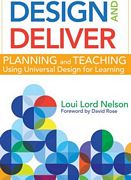
|
Design and Deliver: Planning and Teaching Using
Universal Design for Learning. Loui Lord Nelson, $45.50
Universal Design for Learning is the best way to teach
all students effectively . but how can a busy teacher get started with UDL
right now? Answers are in this vibrant, research-based guidebook, created by
seasoned teacher and former UDL Coordinator Loui Lord Nelson. K-12 educators
will learn how to use the three key principles of UDL-Engagement,
Representation, and Action & Expression-to present information in multiple
ways and meet the needs of diverse learners. Written in first person, like a
face-to-face talk with a passionate educator, the book gives teachers a
reader-friendly UDL primer and a practical framework for implementation, with
detailed guidelines on lesson planning and checkpoints that help them stay on
track. USE UDL PRINCIPLES TO HELP STUDENTS:
- sharpen executive function skills, such as goal-setting and
strategy development
- improve comprehension and information processing
- stay engaged during lessons and overcome distractions
- communicate effectively using multiple tools, including both high
and low/no technology options
- develop self-regulation and self-assessment skills
- sustain effort and persistence
- increase autonomy
- show what they know through flexible, individualized assessment
options
|
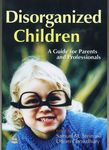
|
Disorganized Children: a
Guide for Parents and Professionals. Edited by Samuel Stein
&Uttom Chowdhury, $39.95
Disorganized children may display a range of behaviours symptomatic
of ADHD, autism and/or conduct disorders, but they often fail to
meet all the criteria for a clear diagnosis.
In this book, psychiatrists, speech, family and occupational
therapists and neurodevelopment specialists present a range of
behavioural and psychological strategies to help disorganized children
improve concentration and performance in the classroom and deal
with a variety of behaviour and social interaction difficulties.
The authors provide an insight into the mind of disorganized children
and practical guidance on how parents and professionals can best
to help them achieve their full potential. |
|
The ECLIPSE Model:
Teaching Self-Regulation, Executive Function, Attribution, and Sensory
Awareness to Students with Asperger Syndrome, High-Functioning Autism,
and Related Disorders. Sherry Moyer, $34.95
The process of attributing or assessing
our circumstances is a neglected area for young people with
Asperger Syndrome and other pervasive developmental disabilities,
yet it poses severe challenges for them. The ECLIPSE Model
targets the global skills needed to improve social competence,
such as executive functioning, theory of mind, causal attribution,
processing speed, and working memory. Without effective use
of these skills on a regular basis, development of other areas
of functioning, such as academic, adaptive or activities of
daily living, and social and vocational skills will be challenged.
This curriculum provides step-by-step lessons for teaching
these vital skills in a way that is motivating to young people. |
Back to top
|
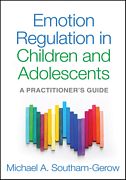
Emotion Regulation in Children and Adolescents: a
Practitioner's Guide. Michael Southam-Gerow, $35.50
Emotion regulation difficulties are central to a range of
clinical problems, yet many therapies for children and adolescents lack a focus
on emotion and related skills. In a flexible modular format, this much-needed
book presents cutting-edge strategies for helping children and adolescents
understand and manage challenging emotional experiences. Each of the eight
treatment modules can be used on its own or in conjunction with other
therapies, and includes user-friendly case examples, sample dialogues, and
engaging activities and games. Emotion-informed assessment and case
conceptualization are also addressed. |
|
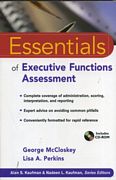
Essentials of Executive Functions
Assessment. George McCloskey & Lisa Perkins, $66.00
Quickly acquire the knowledge, skills
and tools you need to understand and assess children and adolescents struggling
with executive functions deficits. |
|
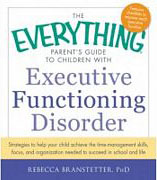
The Everything Parent's Guide to Children with
Executive Functioning Disorder. Rebecca Branstetter, $19.99
Strategies to help your child achieve the time-management
skills, focus, and organization to succeed in school and life. |
Back to top
|
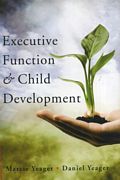
Executive Function & Child
Development. Marcie Yeager & Daniel Yeager,
$26.50
Poor executive function (EF) in the
brain can mean behavioral and attentional problems in school. This book
explains to professionals and parents how EF develops in kids, what EF
difficulties look like, and what creative and effective interventions can meet
their needs. Executive functions involve mental processes such as:
- Working memory–holding several pieces of
information in mind while we try to do something with them–for example,
understand and solve a problem or carry out a task.
- Response inhibition–inhibiting actions that
interfere with our intentions or goals.
- Shifting focus–interrupting an ongoing response
in order to direct attention to other aspects of a situation that are important
for goal attainment.
- Cognitive flexibility–generating alternative
methods of solving a problem or reaching a goal.
- Self-monitoring–checking on one's own cognitions
and actions to assure that they are in line with one's intentions.
- Goal Orientation–creating and carrying out a
multi-step plan for achieving a goal in a timely fashion, keeping the "big
picture" in mind.
|
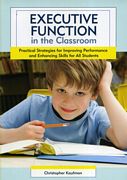
|
Executive Function
in the Classroom. Christopher Kaufman, $46.50
Practical strategies for improving performance and enhancing skills for all students. This teacher-friendly guide lays a clear and simple path to stronger executive skills for all students and lasting academic and social success. |
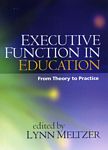
|
Executive Function
in Education: from Theory to Practice. Lynn Meltzer, editor,
$45.95
This uniquely integrative book brings together leading researchers
and practitioners from education, neuroscience, and psychology.
It presents a theoretical framework for understanding executive
function difficulties together with a range of effective approaches
to assessment and instruction. Scholarly and authoritative yet
highly practical, the book provides guidelines for intervening
at the level of the individual child, the classroom, and the entire
school. |
Back to top
|
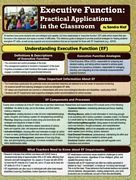
Executive Function:
Practical Applications in the Classroom. Sandra Rief, $15.95
This 4-page, laminated reference guide
is designed to provide practical strategies for helping students strengthen
Executive Function skills, as well as key supports and accommodations that are
so important for those with EF impairments, such as ADD/ADHD. |
|
Executive Function in
Preschool-Age Children: Integrating Measurement, Neurodevelopment, and
Translational Research. James
Griffin, Peggy McCardle & Lisa Freund, $115.95
A primary aim of the neuropsychological revolution has
been the mapping of what has come to be known as executive function (EF). This term
encompasses a range of mental processes such as working memory, inhibitory
control, and cognitive flexibility that, together, regulate our social
behavior, and our emotional and cognitive well-being.
In this book, top scientists from a variety of fields
investigate executive function as it develops in early childhood. Because
researchers differ in their conceptualizations of basic processes and even in
how they define EF itself, contributors begin by discussing comparability and
replicability, key issues which are of primary importance to those seeking to
move the field to a new level of rigor. Next, they tackle the nuts-and-bolts of
the development of EF in preschoolers, including the neurobiological mechanisms
and circuitry that underlie EF development as well as the role of EF in
assessing risk — and its counterpart, resilience. Finally, they highlight
exciting new clinical applications of EF research, including the use of EF in
contextualizing and assessing family risk, the impact of socioeconomic status
on neurological development, and the promotion of EF development through early
education programs. |
Back to top
|
Executive Functioning Workbook for
Teens: Help for Unprepared, Late, & Scattered Teens. Sharon Hansen, $24.95
Are you disorganized, chronically late,
forgetful, or impulsive? Do you struggle to get your homework done, but never
manage to turn it in on time? It may not be your fault. You might have
executive functioning disorder (EFD), an attention disorder marked by an
inability to stay on task that is common in people with learning disabilities.
If you have tried to better manage your time and meet deadlines with little
success, you may feel like giving up. THE EXECUTIVE FUNCTIONING WORKBOOK FOR
TEENS is an easy-to-use, practical workbook written by a licensed school
counselor, and it will provide you with the skills needed to get organized,
retain information, communicate effectively, and perform well in school and
everyday life. Based in proven-effective cognitive behavioral therapy (CBT),
the book offers activities that will help you better understand your disorder
and cope with it effectively.
With one chapter for each of the ten
main areas of EFD, the book also includes tips for initiating positive action
and change, improving flexibility in thinking, sustaining attention,
organizing, planning, enhancing memory, managing emotions, and building
self-awareness. Written in a fun, engaging format, this book is designed to
motivate and inspire you to carry out and complete tasks with ease. From
handling frustration to taking notes in class, this book will help you hone the
skills you need to succeed. |
|
Executive Functions:
What They Are, How They Work, and Why They Evolved. Russell
Barkley, $49.95
This groundbreaking book offers a
comprehensive theory of executive functioning (EF) with important clinical implications.
Synthesizing cutting-edge neuropsychological and evolutionary research, Russell
Barkley presents a model of EF that is rooted in meaningful activities of daily
life. He describes how abilities such as emotion regulation, self-motivation,
planning, and working memory enable people to pursue both personal and
collective goals that are critical to survival. Key stages of EF development
are identified and the far-reaching individual and social costs of EF deficits
detailed. Barkley explains specific ways that his model may support much-needed
advances in assessment and treatment. |
Back to top
|
Executive Skills
in Children and Adolescents: a Practical Guide to Assessment and
Intervention, Second Edition. Peg Dawson & Richard
Guare, $58.95
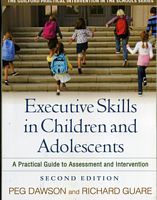
Concise and practitioner friendly, this bestselling guide has helped put executive skills on the map for school-based clinicians and educators. The book explains how these critical cognitive processes develop and why they play such a key role in children's behavior and school performance. Provided are step-by-step guidelines and many practical tools to promote executive skill development by implementing environmental modifications, individualized instruction, coaching, and whole-class interventions. In a large-size format with convenient lay-flat binding, the book includes more than two dozen reproducible assessment tools, checklists, and planning sheets. |
|
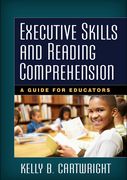
Executive Skills and Reading Comprehension: a Guide
for Educators. Kelly Cartwright, $45.95
How do K-12 students become self-regulated learners who
actively deploy comprehension strategies to make meaning from texts? This
cutting-edge guide is the first book to highlight the importance of executive
skills for improving reading comprehension. Chapters review the research base
for particular executive functions — such as planning, organization, cognitive
flexibility, and impulse control — and present practical skills-building
strategies for the classroom. Detailed examples show what each skill looks like
in real readers, and sidebars draw explicit connections to the Common Core
State Standards (CCSS). |
|
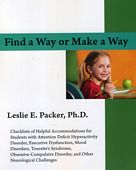
Find a
Way or Make a Way: Checklists of Helpful Accommodations for Students
with ADHD, Executive Dysfunctions, Mood Disorders, Tourette's Syndrome,
OCD and Other Neurological Challenges. Leslie Packer, $28.95
Find a Way or Make a Way is designed to provide lots of
practical ideas to incorporate into a student's plan, with sections
on accommodations for homework, tests, sleep problems, and handwriting
problems. |
Back to top
|
Flexible and Focused: Teaching Executive Function
Skills to Individuals with Autism and Attention Disorders. Adel Najdowski,
$53.50
Flexible and Focused: Teaching Executive Function
Skills to Individuals with Autism and Attention Disorders is a manual
written for individuals who work with learners who struggle with executive
function deficits. The manual takes the perspective that executive function
skills can be improved through effective intervention, just like any other
skills. This how-to manual provides practical strategies for teaching learners
to be focused, organized, flexible, and able to effectively manage themselves.
Ready-to-use lessons, data sheets, worksheets, and other tools for
practitioners, educators, and parents are provided to help them tackle common
problems associated with executive function deficits in learners of any
diagnosis, ages 5 to adult. The principles of applied behavior analysis (ABA),
which form the foundation of this manual, are translated into simple,
easy-to-use procedures. Lessons for improving executive function skills in
real-life everyday situations are provided in the following areas:
- Self-awareness
- Inhibition and impulse control
- Self-management
- Attention
- Organization
- Problem solving
- Time management
- Planning
- Working memory
- Emotional self-regulation
- Flexibility
|
|
FLIPP the Switch: Strengthen Executive Function Skills.
Sheri Wilkins & Carol Burmeister, $34.50
Although many educators associate deficits in EF skills
with students on the autism spectrum, the reality is that many young people
struggle with executive functioning. In fact, it is accurate to say that all
young people are learning executive functioning as these skills are not fully
developed until people are well into their twenties. The good news is that
there are evidence-based strategies that can be used at home, in school, in the
community, and in work situations that can significantly improve the executive
functioning of individuals who struggle in this area. Given the right tools,
parents, educators, and others who work with this population can effectively structure
the environment and teach strategic thinking skills that will support the
critical life skills of flexibility, leveled emotionality, impulse control,
planning, and problem solving.
FLIPP the Switch is a practical book written for
parents and educators by parents and educators. The target audience is anyone
who works with young people aged 3-22 who are disorganized, inflexible,
impulsive, and who struggle with planning or problem solving. This book is
indispensable for anyone who wants to minimize conflict, maximize on-task
behavior, and support positive social-emotional development in a child or
student with challenging behavior. |
|
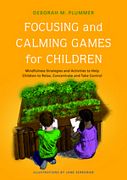
Focusing and Calming Games for
Children: Mindfulness Strategies and Activities to Help Children to Relax,
Concentrate and Take Control. Deborah Plummer, Illustrated
by Jane Serrurier, $31.95
Having the ability to focus, relax and
concentrate is key to enabling children and young people to achieve emotional
well-being, and is also important for a child's development of skills and
abilities.
This book uses a model of 'mindfulness
play' to help children to achieve well-being, which encourages children to
build awareness of their inner and outer worlds. Part One covers the
theoretical and practical background, setting out how to facilitate play using
the mindfulness play model, including consideration of the emotional
environment. Part Two includes a wealth of games and activities, from 'Body
focus' and 'Fidget flop' to 'Musical drawings' and 'Pass a smile'. The
activities are suitable for use with groups and individual children aged 5–12,
and can be adapted for children with specific attention and concentration
difficulties, such as ADHD, and for older children.
This is an ideal resource for teachers,
counsellors, social workers, occupational therapists, speech and language
therapists, youth workers, parents, and carers. |
Back to top
|
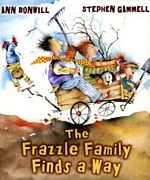
The Frazzle Family Finds a Way. Ann Bonwill & Steven Gammell, $26.50
Every member of the Frazzle family is
disastrously forgetful. Mr. Frazzle forgets his trousers, Wags the dog can't
find his bone, and Annie and Ben bring fishing poles and towels to school instead
of their homework. Not even Aunt Rosemary with her organizational tips can
help. But one day Annie has an idea that combines rhyme, recall, and song into
a melodic way to remember in this warmhearted tribute to compensating for
weaknesses. |
|
Handbook of Executive Functioning. Sam Goldstein & Jack Naglieri, $106.50
Planning. Attention. Memory.
Self-regulation. These and other core cognitive and behavioral operations of
daily life comprise what we know as executive functioning (EF). But despite all
we know, the concept has engendered multiple, often conflicting definitions and
its components are sometimes loosely defined and poorly understood. THE
HANDBOOK OF EXECUTIVE FUNCTIONING cuts through the confusion, analyzing both
the whole and its parts in comprehensive, practical detail for scholar and
clinician alike. Background chapters examine influential models of EF, tour the
brain geography of the executive system, and pose salient developmental
questions. A section on practical implications relates early deficits in
executive functioning to ADD and other disorders in children, and considers
autism and later-life dementias from an EF standpoint. Further chapters weigh
the merits of widely used instruments for assessing executive functioning and
review interventions for its enhancement, with special emphasis on children and
adolescents. |
|
Handbook of Self-Regulation, 3rd Edition: Research,
Theory, and Applications. Edited by Roy Baumeister & Kathleen
Vohs, $117.50
From leading authorities, this significantly revised and
expanded handbook is a highly regarded reference in a rapidly growing field. It
thoroughly examines the conscious and unconscious processes by which people
manage their behavior and emotions, control impulses, and strive toward desired
goals. Chapters explore such vital issues as why certain individuals have
better self-control than others; how self-regulation shapes, and is shaped by,
social relationships; underlying brain mechanisms and developmental pathways;
and which interventions can improve people’s self-control. The volume also
addresses self-regulatory failures and their consequences, with chapters on
attention-deficit/hyperactivity disorder, criminality, addictions, and money
management challenges. As a special bonus, purchasers of the third edition can
download a supplemental e-book featuring two notable, highly cited chapters
from the second edition.
New to This Edition:
- Incorporates the latest topic areas, theories, and empirical
findings
- Updated throughout, with 21 new chapters and numerous new authors
- Cutting-edge topics: implicit self-regulation processes, the role
of physical needs and processes (such as the importance of sleep), the benefits
of dampening positivity, the frequency and consequences of emotional control in
the workplace, and self-regulation training
- Expanded coverage of motivational factors, romantic relationships,
and lapses of self-control
|
Back to top
|
Helping Preschool-Age Children Learn Self-Regulation:
Lessons, Activities, Songs, and Games Designed To Give Children the Skills They
Need to Succeed for the Rest of Their Lives.Brad Chapin, $57.95 (includes
a CD-ROM of reproducible material)
This highly anticipated resource focuses on
skill-training for preschool-age children. Self-regulation is a universal skill
necessary for academic success, emotional control and healthy social
interaction. With this one resource, you will be able to address School
Readiness, Anger Problems, Anxiety, School Safety, Self-esteem, Social Skills
and much more. The authors have developed this guide with a focus on how to
help you "Do More with Less." The strategies are creative and
designed to engage young children in the process to create change quickly.
Includes a CD with reproducibles worksheets. |
|
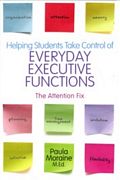
Helping Students Take
Control of Everyday Executive Functions: the Attention Fix. Paula
Moraine, $33.95
This book presents an innovative model
for strengthening and developing executive function in any student, including
those with attention, memory, organization, planning, inhibition, initiative,
and flexibility difficulties. It provides guidance on how to support each
student's evolving executive function, and how to encourage those who are ready
to develop self-advocacy and become more responsible for the development of his
or her own executive function skills.
The author advocates a student-centered
approach in which educators explore eight key 'ingredients' with the student:
relationships; strengths and weaknesses; self-advocacy and responsibility;
review and preview; motivation and incentive; synthesis and analysis; rhythm
and routine; and practice and repetition. She provides step-by-step
explanations of how the educator and student can then explore and use these
'ingredients' in different ways and in different combinations to successfully
address particular areas of difficulty. Original and effective, the approach
outlined in this book will be of interest to teachers and other professionals
involved in supporting executive function in students of all ages. |
Back to top
|
Helping Teens Learn Self-Regulation: Lessons, Activities
& Worksheets for Teaching the Essentials of Responsible Decision-Making
& Self-Control. Brad Chapin, $57.95 (includes a CD-ROM of reproducible
material) Grades 7-12
Self-regulation includes a universal set of skills
necessary for academic success, emotional control, and healthy social
interaction. With these resources you will be able to address anger problems,
academic performance challenges, anxieties, school safety issues, self-esteem,
social skills, and much more. The books provide a solid yet flexible foundation
for intervention. The individual strategies are presented in a simple
step-by-step process using lessons activities and reproducible worksheets.
These strategies can be used individually for a quick intervention, or they can
be used to create dozens of unique curricula — tailor made to target specific
problem areas for small groups or classrooms.
The authors have split the self-regulation training
process into three functional areas: physical, emotional, and cognitive. Using
strategies based soundly upon the evidence base of cognitive-behavioral
psychology this resource will help you move children and teens progressively
through skill areas in each of these three domains. The strategies are
creative, fresh, and engaging in order to effect change quickly and increase
the long-term impact. |
|
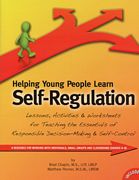
Helping Young People
Learn Self-Regulation: Lessons, Activities & Worksheets for
Teaching the Essentials of Responsible Decision-Making & Self-Control.
Brad Chapin & Matthew Penner, $57.95 (includes a CD-ROM
of reproducible material) Grades K-8
Self-regulation includes a universal set
of skills necessary for academic success emotional control and healthy social
interaction. With this single resource you will be able to address children's
anger problems, academic performance challenges, anxieties, school safety
issues, self-esteem, social skills, and much more. This resource provides a
solid yet flexible foundation for intervention. The individual strategies are
presented in a simple step-by-step process using lessons activities and
reproducible worksheets. These strategies can be used individually for a quick
intervention with children, or they can be used to create dozens of unique
curricula — tailor-made to target specific problem areas for small groups or
classrooms.
The authors have split the self-regulation training process into three
functional areas: physical, emotional, and cognitive. Using strategies based
soundly upon the evidence base of cognitive-behavioral psychology this resource
will help you move children progressively through skill areas in each of these
three domains. The strategies are creative, fresh, and engaging in order to effect
change quickly and increase the long-term impact on children. |
Back to top
|
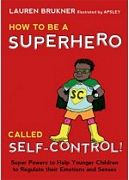
How to Be a Superhero Called Self-Control: Super
Powers to Help Younger Children to Regulate Their Emotions and Senses.
Lauren Brukner, illustrated by Apsley, $22.95
Meet Self-Control, a superhero who wants to teach young
children his super powers of self-control! Anxiety, frustration, anger, and
other difficult feelings won't stand a chance against their new-found powers. Self-Control
teaches children with emotional and sensory regulation difficulties aged
approximately 4-7 how to calm themselves using self-massage, deep pressure,
breathing exercises, and activities such as making an imaginary list and
finding their own peaceful place. This illustrated book also features an
appendix with photocopiable super power charts, reinforcers, and reminder tools
to ensure that parents, teachers, and other professionals can support children
in upholding superhero strategies even after the book has been read. |
|
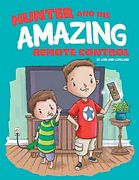
Hunter and His Amazing Remote Control. Lori Ann
Copeland, $21.95 (ages 5-11)
This resource is a unique approach to teaching
self-control to children whether or not they have ADD or ADHD. In this
full-color, illustrated storybook, Hunter teaches students how he learned to
use his very special remote control to become more successful. Once children
read or hear Hunter's story, they can create their own amazing remote controls.
Remote control buttons include:
- Channel Changer - Filtering out distractions
- Pause - Stopping to think relax and create a plan
- Fast Forward - Thinking before acting
- Rewind - Shifting focus from past failure to future change
- Slow Motion - Slowing down and managing stress
- Coach - Problem solving
- Zapper - Recognizing and rejecting negative thinking
- Way to Go! - Using positive self-talk
|
|
The Impulsive, Disorganized Child: Solutions for
Parenting Kids with Executive Functioning Difficulties. James Forgan &
Mary Anne Richey, $24.95
Impulsive, scattered, lost, unfocused, unprepared,
disorganized: These are just a few of the words used to describe kids with
executive functioning deficits, which commonly affect many children already
diagnosed with ADHD, learning disabilities, and autism. The Impulsive,
Disorganized Child: Solutions for Parenting Kids With Executive Functioning
Difficulties helps parents pinpoint weak executive functions in their
children, then learn how to help their kids overcome these deficits with
practical, easy solutions.
Children who can't select, plan, initiate, or sustain
action toward their goals are children who simply struggle to succeed in school
and other aspects of life. Parents need the helpful, proven advice and
interactive surveys and action plans in this book to empower them to take
positive action to teach their disorganized, impulsive child to achieve independence,
success, and a level of self-support. |
Back to top
|
Inclusive
Programming for High School Students with Autism or Asperger’s
Syndrome. Sheila Wagner, $22.95
This comprehensive guide will help you give your child or student
the best possible high school experience. You will learn how to
help students navigate the social minefields of friendships and
dating, while fostering the executive functioning skills they will
need as adults. |
|
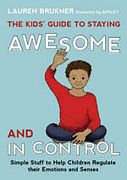
The Kids' Guide to Staying Awesome and In Control:
Simple Stuff to Help Children Regulate their Emotions and Senses. Lauren
Brukner, Illustrated by Apsley, $25.95
Packed with simple ideas to regulate the emotions and
senses, this book will help children tackle difficult feelings head-on and feel
awesome and in control! From breathing exercises, pressure holds and finger
pulls, to fidgets, noise-reducing headphones and gum, the book is brimming with
fun stuff to help kids feel cool, calm and collected. They will learn how to
label difficult feelings, choose the perfect strategies and tools to tackle
them, and use these correctly whether at home or at school. The strategies and
tools are accompanied by cartoon-style illustrations, and the author includes
useful tips for parents and teachers as well as handy visual charts and
checklists to track learning and progress.
Armed with this book, kids will be well on their way to
managing difficult emotions and feeling just right in whatever situation life
throws at them! Suitable for children with emotional and sensory processing
difficulties aged approximately 7 to 14 years. |
|
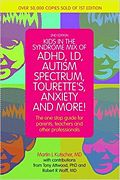
Kids in the Syndrome
Mix of ADHD, LD, Asperger’s, Tourette’s, Bipolar and
More! Martin Kutscher, $24.95
Kids in the Syndrome Mix is a concise, current, all-in-one
guide to the whole range of often co-existing neurobehavioral disorders
in children, from attention deficit hyperactivity disorder (ADHD),
obsessive-compulsive disorder, and bipolar disorder, to autistic
spectrum disorders, nonverbal learning disabilities, sensory integration
problems, and executive dysfunction. The author's sympathetic yet
upbeat approach and skillful explanations of the inner world of
children in the syndrome mix make this an invaluable companion
for parents, teachers, professionals, and anyone else who needs
fast and to-the-point advice on children with special needs. |
Back to top
|
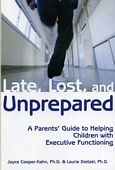
Late, Lost, and Unprepared: a Parents' Guide to
Helping Children with Executive Functioning. Joyce Cooper-Kahn
& Laurie Dietzel, $29.95
Executive functions are the cognitive
skills that help us manage our lives and be successful. Children
with weak executive skills, despite their best intentions, often
do their homework but forget to turn it in, wait until the last
minute to start a project, lose things, or have a room that looks
like a dump! The good news is that parents can do a lot to support
and train their children to manage these frustrating and stressful
weaknesses. |
|
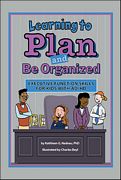
Learning to Plan and Be Organized: Executive Function
Skills for Kids with AD/HD. Kathleen Nadeau, $17.50 (ages 8-12)
When you are good at planning and organizing, your day
just runs smoother. And guess what? These skills can help you reach your goals,
too! Packed with examples, activities, and fun, this workbook will help you:
- Build good habits
- Develop routines
- Organize your stuff
- Get things done
- Manage your time
- Plan projects
- Create reminders for yourself
- And much more!
|

|
Little Flower Yoga for Kids: a Yoga
and Mindfulness Program to Help Your Child Improve Attention and Emotional
Balance. Jennifer Cohen Harper, $27.95
Little Flower Yoga for Kids offers a
fun and unique program combining yoga and mindfulness in an easy-to-read
format. Written specifically for parents and kids, the book aims at teaching
children to pay attention, increase focus, and balance their emotions – all
while building physical strength and flexibility. Based on a growing body of
evidence that yoga and mindfulness practices can help children develop focus
and concentration, the simple yoga exercises in this book can easily be
integrated into their child's daily routine, ultimately improving health,
behavior, and even school achievement.
The book details the five main
components of the program: connect, breath, move, focus, and relax. Drawing on
these components, Harper shares practical activities that parents can use with
their children both on a daily basis and as applied to particularly challenging
issues. And while this book is targeted to parents, teachers may also find it
extremely useful in helping students achieve better attention and focus. |
Back to top
|
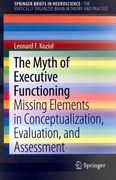
The Myth of Executive Functioning: Missing Elements in
Conceptualization, Evaluation, and Assessment. Leonard Koziol, $65.95
Noting the lack of consensus concerning definition,
component skills, and location within the brain, The Myth of Executive
Functioning calls basic assumptions, prominent theories, commonly used
test methods, and even the phrase 'executive functioning' into
question. The book's deceptively simple argument takes an evolutionary/neuroscience
look at the cornerstones of cognitive organization, including memory, planning,
decision-making, and adaptation to novel circumstances. From there, gaps are
identified between systems of cognitive control and those behaviors that are
evaluated in neuropsychological testing — gaps that contribute to the disconnect
between how science views mind and body, brain and behavior. The author's
problem-solving metaphor places new emphasis on stimulus processing and on the
relationship between movement and thought as he offers thought-provoking
perspectives on:
- The limits of neuropsychological constructs.
- The components of adaptive thinking.
- The automatic aspects of problem solving.
- The left-brain/right-brain dichotomy.
- Problems with the domain approach to cognition.
- New paradigms for testing cognitive functioning.
A controversial presentation with the potential to change
clinical practice and training, The Myth of Executive
Functioning will be read, debated, and learned from by neuropsychologists,
clinical psychologists, psychiatrists, cognitive neuroscientists, and
rehabilitation specialists. |
|
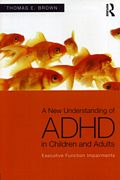
A New Understanding of ADHD in
Children and Adults: Executive Function Impairments. Thomas Brown, $69.95
For over 100 years, ADHD has been seen
as essentially a behavior disorder. Recent scientific research has developed a
new paradigm which recognizes ADHD as a developmental disorder of the cognitive
management system of the brain, its executive functions. This cutting-edge book
pulls together key ideas of this new understanding of ADHD, explaining them and
describing in understandable language scientific research that supports this
new model. It addresses questions like:
- Why can those with ADHD focus very well on some
tasks while having great difficulty in focusing on other tasks they recognize
as important?
- How does brain development and functioning of persons
with ADHD differ from others?
- How do impairments of ADHD change from childhood
through adolescence and in adulthood?
- What treatments help to improve ADHD
impairments? How do they work? Are they safe?
- Why do those with ADHD have additional emotional,
cognitive, and learning disorders more often than most others?
- What commonly-held assumptions about ADHD have
now been proven wrong by scientific research?
Psychiatrists, psychologists, social
workers, and other medical and mental health professionals, as well as those
affected by ADHD and their families, will find this to be an insightful and
invaluable resource. |
|
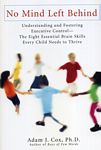
No Mind
Left Behind: Understanding and Fostering Executive Control—The
Eight Essential Brain Skills Every Child Needs to Thrive. Adam Cox, $17.50
No Mind Left Behind is a program for helping children master
the eight essential cognitive skills that are critical for success
in life in work:
• Taking initiative • Screening out distractions • Organizing • Thinking
flexibly
• Planning • Regulating emotions • Self-monitoring • Using
memory effectively
Using case studies and anecdotes, Dr. Cox presents a comprehensive
and practical plan for parents. The book addresses special-needs
children as well as neurotypical children, and includes practical
suggestions for parents and educators. |
Back to top
|
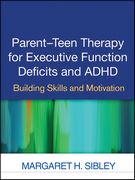
Parent-Teen Therapy for Executive Function Deficits
and ADHD: Building Skills and Motivation. Margaret Sibley, $42.50
This user-friendly manual presents an innovative, tested
approach to helping teens overcome the frustrating organizational and
motivation problems associated with executive function deficits and
attention-deficit/hyperactivity disorder (ADHD). The Supporting Teens' Autonomy
Daily (STAND) approach uses motivational interviewing (MI) to engage teens and
their parents in building key compensatory skills in organization, time
management, and planning. Parent training components ease family conflict and
equip parents to support kids' independence. Ready-to-use worksheets and rating
scales are provided; the print book has a large-size format for easy
photocopying. Purchasers get access to a Web page where they can download and
print all 45 reproducible tools. |
|
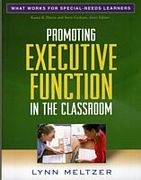
Promoting Executive
Function in the Classroom. Lynn Meltzer, $53.50
Accessible and practical, this book helps teachers incorporate executive function processes — such as planning, organizing, prioritizing, and self-checking — into the classroom curriculum. Chapters provide effective strategies for optimizing what K-12 students learn by improving how they learn. Featuring numerous whole-class ideas and suggestions, the book also shows how to differentiate instruction for students with learning or attention difficulties. |
|
|
Self-Control to the Rescue: Super Powers to Help Kids
Through the Tough Stuff in Everyday Life. Lauren Brukner, illustrated by
Apsley, $22.95
The self-control super hero is back! This time, they've
come prepared with simple strategies to tackle the difficult emotions and
challenges of everyday life. From the morning routine to making friends at
recess, paying attention in class and getting a good night's sleep, this guide
will help children stay on track and save the day!
Focusing on specific times of the day that present
particular challenges, the book uses illustrations and simple language to
describe breathing exercises, stretching, and visualization techniques to help
children aged 4-7 keep calm and in control. Suitable for all children, but
especially those with sensory and emotional regulation difficulties, this is an
accessible guide with extra tips and resources for parents, educators or
therapists. |
Back to top
|
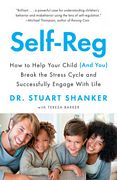
Self-Reg: How to Help Your Child (and You) Break the
Stress Cycle and Successfully Engage with Life. Stuart Shanker, with Teresa
Barker, $20.00 
There is no such thing as a bad kid. According to
world-renowned psychologist Stuart Shanker, even the most frustrating, annoying
or troubling behaviour has an explanation. That means there is a way to make
things better.
Shanker's research has shown that for every child and
every adult the ability to thrive — to complete tasks, form friendships, learn,
and even love — depends on being able to self-regulate. In the past twenty
years neurobiological research has been showing us a lot about brain states,
and what is clear now is that the ability to self-regulate in response to
stress is central. There are dramatic consequences to looking at a child's
behaviour through the lens of self-regulation. Above all it discards the
knee-jerk reaction that a child who is having trouble paying attention,
controlling his impulses, or who gives up easily on a difficult task, is
somehow weak or lacks self-discipline, or is not making a great enough effort
to apply himself.
According to Shanker, the ability to deal effectively
with stress is limited, though. Like a tank of gas, our energy reserves
eventually dwindle, leaving a kid — or an adult — simply unable to control his
or her impulses. And what draws down our reserves? Excessive stress. Stress of
all kinds, from social anxiety to an uncomfortable chair. Reduce the stress
loads, and problems quickly dissipate. Dr. Shanker offers practical,
prescriptive advice for parents — giving them concrete ways to develop their
own self-regulation skills and teach their children to do the same. |
|
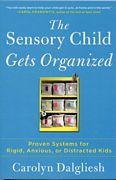
The Sensory Child Gets Organized:
Proven Systems for Rigid, Anxious, or Distracted Kids. Karen Dalgliesh, $18.99
Sensory Kids — like those with sensory
processing disorder, anxiety disorder, AD/HD, autism, bipolar disorder, and
OCD — often feel frustrated and overwhelmed, creating stress in everyday life for
the whole family. Now, with THE SENSORY CHILD GETS ORGANIZED, there’s help
and hope.
As a professional organizer and parent of a sensory child, Carolyn Dalgliesh
knows firsthand the struggles parents face in trying to bring out the best in
their rigid, anxious, or distracted children. She provides simple, effective
solutions that help these kids thrive at home and in their day-to-day
activities, and in this book you’ll learn how to:
- Understand what makes your sensory child tick
- Create harmonious spaces through sensory
organizing
- Use structure and routines to connect with your
child
- Prepare your child for social and school
experiences
- Make travel a successful and fun-filled journey
|
|
The Skills System Instructor’s Guide: an
Emotion-Regulation Skills Curriculum for All Learning Abilities. Julie Brown, $48.95
Having the capacity to benefit from emotions,
rather than being paralyzed by them, offers people the opportunity to navigate
difficulties, while being able to face life, relationships, and themselves with
courage, grace, and strength. In THE SKILLS SYSTEM INSTRUCTOR’S GUIDE, author
Julie Brown provides a curriculum for helping people improve emotion regulation
capacities, which allows the person to actively participate in both joyful and
challenging aspects of life.
The guide presents nine simple,
user-friendly adaptive coping skills effective for individuals of diverse
learning abilities. Based on Dialectic Behavior Therapy principles, the Skills
System helps people of all ages learn to effectively regulate emotions,
thoughts, and actions to reach personal goals. |
Back to top
|
The Smart But Scattered Guide to Success: How to Use
Your Brain's Executive Skills to Keep Up, Stay Calm, and Get Organized at Work
and at Home. Peg Dawson & Richard Guare, $23.50
Are you smart, scattered, and struggling? You're not
alone. Cutting-edge research shows that today's 24/7 wired world and the
growing demands of work and family life may simply max out the part of the
brain that manages complex tasks. That's especially true for those lacking
strong executive skills — the core brain-based abilities needed to maintain
focus, meet deadlines, and stay cool under pressure.
In this essential guide,
leading experts Peg Dawson and Richard Guare help you map your own executive
skills profile and take effective steps to boost your organizational skills,
time management, emotional control, and nine other essential capacities. The
book is packed with science-based strategies and concrete examples, plus
downloadable practical tools for creating your own personalized action plan.
Whether on the job or at home, you can get more done with less stress. |
|
Smart But Scattered:
the Revolutionary “Executive Skills” Approach to Helping
Kids Reach Their Potential. Peg Dawson & Richard Guare,
$23.95
Scientists who study child development
have recently found that kids who are "smart
but scattered" lack or lag behind in crucial executive skills
— the core, brain-based habits of mind required to execute tasks
like getting organized, staying focused, and controlling emotions.
Drawing on this revolutionary discovery, school psychologist Peg
Dawson and neuropsychologist Richard Guare have developed an innovative
program that parents and teachers can use to strengthen kids' abilities
to plan ahead, be efficient, follow through, and get things done. Smart but
Scattered provides ways to assess children's strengths and
weaknesses and offers guidance on day-to-day issues like following
instructions in the classroom, doing homework, completing chores,
reducing performance anxiety, and staying cool under pressure.
Small steps add up to big improvements, enabling these kids to
build the skills they need to live up to their full potential.
More than 40 reproducibles are included. |
|
Smart But Scattered Teens: the
Executive Skills Program for Helping Teens Reach Their Potential. Richard Guare, Peg Dawson & Colin Guare, $23.95
If you're the parent of a "smart
but scattered" teen, trying to help him or her grow into a
self-sufficient, responsible adult may feel like a never-ending battle. Now you
have an alternative to micromanaging, cajoling, or ineffective punishments.
This positive guide provides a science-based program for promoting teens'
independence by building their executive skills—the fundamental brain-based
abilities needed to get organized, stay focused, and control impulses and emotions.
Executive skills experts Drs. Richard Guare and Peg Dawson are joined by Colin
Guare, a young adult who has successfully faced these issues himself. Learn step-by-step
strategies to help your teen live up to his or her potential now and in
the future—while making your relationship stronger. |
Back to top
|
Social Interaction
and the Development of Executive Function. Charlie Lewis &
Jeremy Carpendale, Editors, $32.00
This volume focuses on the role of social interactions in the development of executive function, and offers a new and exciting alternative to many contemporary cognitive approaches. Executive function consists of higher cognitive skills involved in the control of thought, action, and emotion. Relatively little is known about the processes that promote its development. The volume is aimed at a broad range of child and adolescent developmental researchers and practitioners interested in how parental scaffolding, family background, as well as educational and cultural processes are linked to the development of children's self-control and social understanding. |
|
Solving Executive Function Challenges: Simple Ways to
Get Kids with Autism Unstuck & On Target. Lynn Cannon, Lauren
Kenworthy, Katie Alexander, Monica Adler Werner, Lisa Greenman & Laura
Anthony, $33.50 (Grades K-8)
How can you help kids with autism be flexible, get
organized, and work toward goals — not just in school but in everyday life? It's
all about executive function, and this quick problem-solving guide
helps you explicitly teach these critical skills to high-functioning children
with autism. Used on its own or in tandem with the popular Unstuck and
On Target classroom curriculum, this practical guide shows how to
embed executive function instruction in dozens of everyday scenarios, from
morning routines to getting homework done. Designed for therapists, teachers,
and parents, these highly effective techniques give children the skills they
need to navigate each day, reach their goals, and succeed inside and outside
the classroom. |
|
Stay Cool and In Control with the Keep-Calm Guru: Wise
Ways for Children to Regulate their Emotions and Senses. Lauren Brukner, illustrated
by Apsley, $24.95
Meet the Keep-Calm Guru, our expert guide to the art of
staying cool, calm, and in control in the face of overpowering feelings! This
illustrated book introduces wise ways for children to recognize and cope with
anxiety, anger, frustration, and other difficult emotions. Using everything
from yoga poses and pressure holds, to deep breathing and relaxing coloring
activities, the Keep-Calm Guru shows kids how to take back control and feel
cool, calm, and just right. Suitable for children with sensory and emotional
regulation difficulties aged approximately 7-14 years. |
|
Study
Strategies PLUS: Building Your Study Skills and Executive Functioning for
School Success. Sandi
Sirowitz, Leslie Davis & Harvey Parker, $20.95
Helps
students improve executive functioning skills such as organizing, managing
time, planning, focusing, and remembering. These skills are extremely important
for success in school and in the workplace. Students will also find valuable
strategies to improve reading comprehension, note taking, and reduce stress. |
Back to top
|
Teaching Life Skills to Children and Teens with ADHD:
a Guide for Parents and Counselors. Vincent Monastra, $23.50
When children have attention deficit/hyperactivity
disorder (ADHD), even if their medication smoothes out the worst of the bumps,
they still may have a lot of trouble in social situations. Teaching Life
Skills to Children and Teens With ADHD describes the Life Skills
Program created by author Vincent Monastra at his ADHD clinic. It features
practical strategies for helping children and teens develop essential life
skills at home, school, or in a support group setting. Some of these skills
include:
- Engaging others in conversations
- Seeking out confidence-building experiences
- Responding appropriately to teasing
- Establishing friendships and social networks
- Trying group activities to avoid isolation
- Developing healthy eating, sleeping and exercise habits
- Solving problems and getting organized
- Showing sensitivity to others' emotions
Each chapter includes exercises to help you teach, model,
and guide your child in trying out these skills. Interactive checklists,
quizzes, and guided journal entries are provided as tools for reflection and
for engaging children and teens in ways that are interesting and fun. |
|
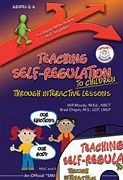
Teaching Self-Regulation to Children through
Interactive Lessons. Will Moody & Brad Chapman, $79.95 (grades K-6)
Unique interactive lessons designed for use on Windows
and MAC-based workstations and digital whiteboards such as SMART Boards and
Promethean Boards. These highly interactive lessons are designed to teach
students the skills, strategies, and behaviors they need to regulate their own
physical, emotional, and cognitive processes. Some of the strategies taught
through these lessons include:
• Melting Freeze (Regulate BODY)
• Animal Movements (Regulate BODY)
• Cooling the Flame (Regulate BODY)
• Name Your Emotions (Regulate EMOTIONS)
• Emotional Rain Gauge (Regulate EMOTIONS)
• Emotional Knot (Regulate EMOTIONS)
• Don’t Take the Bait (Regulate THOUGHTS)
• Defiance Trap (Regulate THOUGHTS)
• Domino Effect (Regulate THOUGHTS)
• Magnetic Thoughts (Regulate THOUGHTS) |
Back to top
|
Teaching Teens with
ADD, ADHD & Executive Function Deficits: a Quick Reference Guide
for Teachers and Parents, 2nd Edition. Chris Zeigler Dendy,
$34.95
An expert on attention deficit disorders issues offers a guide to educating teens with ADD and ADHD. Includes over 80 summaries of new information on research, teaching strategies, education law, executive functioning, social skills, and medication. |
|
Teenagers with ADD, ADHD & Executive Function
Deficits: a Guide for Parents and Professionals, 3rd Edition. Chris Zeigler
Dendy, $36.50
Teenagers with ADD, ADHD & Executive Function
Deficits is the one-stop source of up-to-date, scientifically accurate, and
reassuring information written by parent, teacher, school psychologist, mental
health counselor, and advocate Chris Dendy. Her book looks at key
areas — academics, dating, driving, socializing, and greater independence — that
make adolescence potentially more difficult for kids with ADD, ADHD, or
Executive Function Deficits (EFD).
Teenagers with ADD, ADHD & Executive Function
Deficits gives parents guidance on everything from understanding the diagnosis
to treatment options, and from behavioral and academic issues, to parent involvement
and self-advocacy. The new edition includes new and expanded information on:
- latest diagnostic criteria in the DSM-5
- new research on attention deficits and executive function
deficits and treatment options; the link between ADHD and EFD
- new medications and research on treatment effectiveness
- “concentration deficit disorder” or “slow cognitive tempo,” a new
diagnosis that some experts are advocating for to describe a subset of kids
with inattentive ADHD (low energy, daydreaming, slow processing of info)
- using technology (apps, smartphones, tablets) to help teens
compensate for ADHD-related difficulties
- “flipped classrooms” (teachers send videos of
lectures/explanations of concepts home for kids to watch for homework and then
have kids do written work in class so they can provide feedback as they work)
- updates on educational laws/regulations that affect students with
ADHD
The author recommends a combination approach to treatment
which includes using medications, behavior and academic interventions and
accommodations, ADHD education, and exercise. In addition, she discusses the
role of executive function problems and how they relate to teenagers'
difficulties with organizational skills, long-range planning, and staying on
task. Throughout, are the voices of teens, families, and professionals who
share their experiences and insights. Armed with the book’s comprehensive facts
and strategies, parents, educators, and therapists can be proactive, working
together with teens to build resilience and a hopeful future. |
Back to top
|
Tigers, Too: Executive Functions/Speed
of Processing/Memory. Marilyn Dornbush & Sheryl Pruitt,
$85.95
From the authors of Teaching the Tiger comes this practical,
detailed and insightful look at executive functions, speed of processing
and memory and the impact these have on the academic, behavioral
and social functioning of students with ADHD, Tourette Syndrome
and OCD.
TIGERS, TOO Checklists for Classroom
Objectives and Interventions. Marilyn Dornbush
& Sheryl Pruitt, $28.95
These checklists were developed to help teachers
and parents set goals, identify appropriate intervention strategies and create
an effective educational program for the student who is experiencing
difficulties in the classroom and at home. The book includes material on
arousal and speed of processing; attention, inhibition and activity levels;
executive function; memory; study skills; testing; and social competence. |
 |
|
Train Your Brain for Success: a
Teenager's Guide to Executive Functions. Randy
Kulman, $19.95
TRAIN YOUR BRAIN FOR SUCCESS provides
adolescents with practical, user-friendly strategies to improve their
organizational, planning, memory, and time-management skills. This easy-to-read
guide should help teenagers and their parents to work on skills that are
critical for success in school and life in general. |
Back to top
|
Transforming ADHD: Simple, Effective Attention &
Action Regulation Skills to Help You Focus & Succeed. Greg Crosby &
Tonya Lippert, $23.95
If you have adult attention deficit/hyperactivity
disorder (ADHD), accomplishing everyday tasks like paying bills, getting to a
meeting on time, or simply buying groceries can be extremely difficult. At the
end of the day, you may feel frustrated and unfocused, and life may seem
unmanageable. So, how can you move past the constant forgetfulness, recurring
mistakes, disorganization, distractibility, and restlessness that keep you from
being your very best?
Transforming ADHD offers a breakthrough,
scientifically grounded approach to attention and action regulation skills and
strategies. Looking at ADHD through the latest research and the broad
perspective of interpersonal neurobiology (IPNB) — a model that views one’s mind,
brain, body, and relationships as intimately connected — you’ll discover how to
work with your brain instead of against it, and transform the way you live your
life. Using the practical exercises, tools, and techniques presented in this
book, you’ll learn how to effectively direct your attention and motivate
yourself to action so you can move toward the life you want. |
|
12 Brain/Mind Learning Principles
in Action: Developing Executive Functions of the Human Brain. Renate
Caine, Geoffrey Caine, Carol McClintic & Karl Klimek, $58.95
This guidebook builds the bridge from
brain research to classroom practice. Ideal for teachers and school leaders,
this indispensable volume provides an accessible framework based on how the
brain learns, and shows how to use that knowledge to help both teachers and
students reach higher performance levels. |
|
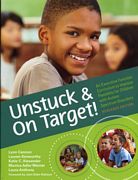
Unstuck & On Target!
Lynn Cannon, Lauren Kenworthy, Katie Alexander, Monica Adler
Werner & Laura Anthony, $62.50
An executive function curriculum to
improve flexibility for children with autism spectrum disorders. |
Back to top
|
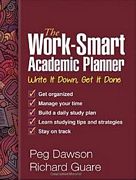
The Work-Smart Academic Planner. Peg Dawson &
Richard Guare, $23.50
From executive skills experts Peg Dawson and Richard
Guare, this large-format academic planner is specially designed for students in
grades 6-12. It provides a system for keeping track of assignments and due
dates while developing the crucial executive skills needed to succeed in school
and beyond. Students are guided to build a daily study plan, manage their time,
set short- and long-term goals, study for tests, and record their successes.
They also get tools for evaluating their own executive skills in order to
target their weaknesses and capitalize on strengths. User-friendly features:
- Spiral binding facilitates everyday use
- Three-hole punched to conveniently fit in a binder
- Reproducible planning forms; purchasers can download and
print extra copies
- Undated daily and monthly calendars for one academic year
- Three-year reference calendar (2015-2017) on each monthly page
- Online-only User's Guide for school psychologists, educators,
coaches, and parents
|
|
Work Your Strengths: a Scientific Process to Identify Your Skills and Match Them to the Best Career for You. Chuck Martin, Richard Guare & Peg Dawson, $24.95
Your brain is hardwired with a unique combination of 12 different executive skills—the cognitive strengths that determine how well you will perform in a particular role. Your strongest and weakest executive skills can make the difference between big-time career success and years of disappointment and failure.
Work Your Strengths helps you avoid “trial-and-error” career moves by matching your strengths to the jobs that call on those skills specifically. Not ready for a move yet? Work Your Strengths can also make a world of difference in the job you’re in now. It can help you not only focus on the projects best suited for you but also recognize skills in others and assign tasks accordingly. |
|
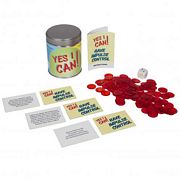
Yes I Can — Have Impulse Control. Gary Yorke, $24.95
(ages 6-14, 2-4 players)
The Yes I Can — Have Impulse Control game is
designed to help participants understand and appreciate various aspects of
being impulsive and regulating their impulses. The cards provide suggestions
and prompts for discussion, and the directions include several fun ways to use
the cards. |
Back to top
Complete
Booklist
The Amazing Remote Control Self-Regulation Program. Lori Ann Copeland, $63.95 (Grades 2-6)
ASANAS for Autism and Special Needs: Yoga to Help
Children with Their Emotions, Self-Regulation and Body Awareness. Shawnee
Thornton Hardy, $19.95
Assessment and Intervention for Executive Function Difficulties.
George McCloskey et al, $60.10
Attention, Memory and Executive Function.
G. Reid Lyon & Norman
Krasnegor, $63.50
Autism and Everyday Executive Function: a
Strengths-Based Approach for Improving Attention, Memory, Organization, and
Flexibility. Paula Moraine, $30.95
Autism as an Executive Disorder. James Russell (ed), $199.50
Boosting Executive Skills in the Classroom: a Practical
Guide for Educators, Grades K-12. Joyce Cooper-Kahn & Margaret
Foster, $35.95
Calm, Alert, and Learning: Classroom Strategies for Self-Regulation.
Stuart Shanker, $67.00
Challenge Software: Teaching Children Self-Regulation.
Brad Chapin, $42.95 (DVD)
Children Who Fail at School But Succeed at Life:
Lessons from Lives Well-Lived. Mark Katz, $54.00
Coaching College Students with Executive Function
Problems. Mary Kennedy, $49.50
Coaching Students with Executive Skills Deficits. Peg Dawson
& Richard Guare, $55.95
Cognitive-Behavioral Therapy for
Adult ADHD: Targeting Executive Dysfunction. Mary
Solanto, $27.50
The Conscious Parent's Guide to Executive Functioning
Disorder: a Mindful Approach for Helping Your Child Focus and Learn. Rebecca
Branstetter, $18.99
Design and Deliver: Planning and Teaching Using
Universal Design for Learning. Loui Lord Nelson, $45.50
Development of Executive Function in Early Childhood. Phillip Zelazo
et al (eds), $42.50
Disorganized Children: a Guide for Parents and Professionals.
Samuel Stein & Uttom Chowdhury (eds), $39.95
The ECLIPSE Model: Teaching Self-Regulation, Executive
Function, Attribution, and Sensory Awareness to Students with Asperger
Syndrome, High-Functioning Autism, and Related Disorders. Sherry Moyer,
$34.95
Emotion Regulation in Children and Adolescents: a
Practitioner's Guide. Michael Southam-Gerow, $35.50
Essentials of Executive Functions Assessment. George McCloskey
& Lisa Perkins, $66.00
The Everything Parent's Guide to Children with
Executive Functioning Disorder. Rebecca Branstetter, $19.99
Executive Function & Child
Development. Marcie Yeager & Daniel Yeager,
$26.50
Executive Function in the Classroom. Christopher Kaufman,
$468.50
Executive Function in Education: From Theory to Practice.
Lynn Meltzer, $45.95
Executive Function: Practical Applications in the Classroom.
Sandra Rief, $15.95
Executive Function in
Preschool-Age Children: Integrating Measurement, Neurodevelopment, and
Translational Research. James
Griffin, Peggy McCardle & Lisa Freund, $115.95
Executive Functioning Workbook for
Teens: Help for Unprepared, Late, & Scattered Teens. Sharon Hansen, $24.95
Executive Functions and the Frontal Lobes: a Lifespan Perspective.
Vicki Anderson & Rani Jacobs (eds), $110.50
Executive Functions: What They Are, How They Work, and
Why They Evolved. Russell Barkley, $49.95
Executive Skills in Children and Adolescents: a Practical
Guide to Assessment and Intervention, 2nd Edition. Peg Dawson & Richard
Guare, $58.95
Executive Skills and Reading Comprehension: a Guide
for Educators. Kelly Cartwright, $45.95
Find a Way or Make a Way: Checklists of Helpful Accommodations
for Students with Attention Deficit Hyperactivity Disorder, Executive
Dysfunction, Mood Disorders, Tourette’s Syndrome, Obsessive-Compulsive
Disorder, and Other Neurological Challenges. Leslie Packer, $28.95
Flexible and Focused: Teaching Executive Function
Skills to Individuals with Autism and Attention Disorders. Adel Najdowski,
$53.50
FLIPP the Switch: Strengthen Executive Function Skills.
Sheri Wilkins & Carol Burmeister, $34.50
Focusing and Calming Games for
Children: Mindfulness Strategies and Activities to Help Children to Relax,
Concentrate and Take Control. Deborah Plummer, Illustrated
by Jane Serrurier, $31.95
The Frazzle Family Finds a Way. Ann Bonwill & Steven Gammell, $26.50
Handbook of Executive Functioning. Sam Goldstein & Jack Naglieri, $106.50
Handbook of Self-Regulation, 3rd Edition: Research,
Theory, and Applications. Edited by Roy Baumeister & Kathleen
Vohs, $117.50
Helping Preschool-Age Children Learn Self-Regulation:
Lessons, Activities, Songs, and Games Designed To Give Children the Skills They
Need to Succeed for the Rest of Their Lives.Brad Chapin, $57.95 (includes
a CD-ROM of reproducible material)
Helping Students Take Control of Everyday Executive Functions:
the Attention Fix. Paula Moraine, $33.95
Helping Teens Learn Self-Regulation: Lessons, Activities
& Worksheets for Teaching the Essentials of Responsible Decision-Making
& Self-Control. Brad Chapin, $57.95 (includes a CD-ROM of reproducible
material) Grades 7-12
Helping Young People Learn Self-Regulation: Lessons, Activities
& Worksheets for Teaching the Essentials of Responsible Decision-Making
& Self-Control. Brad Chapin & Matthew Penner, $57.95 (includes
a CD-ROM of reproducible material) Grades K-8
How to Be a Superhero Called Self-Control: Super
Powers to Help Younger Children to Regulate Their Emotions and Senses.
Lauren Brukner, illustrated by Apsley, $22.95
Inclusive Programming for High School Students
with Autism or Asperger’s Syndrome. Sheila Wagner, $33.95
The Impulsive, Disorganized Child: Solutions for
Parenting Kids with Executive Functioning Difficulties. James Forgan &
Mary Anne Richey, $24.95
The Kids' Guide to Staying Awesome and In Control:
Simple Stuff to Help Children Regulate their Emotions and Senses. Lauren
Brukner, Illustrated by Apsley, $22.95
Kids in the Syndrome Mix of ADHD, LD, Asperger’s,
Tourette’s, Bipolar and More! Martin Kutscher, $24.95
Late, Lost and Unprepared: a Parents’ Guide to Helping
Children with Executive Functioning. Joyce Cooper-Kahn & Laurie Dietzel,
$29.95
Learning to Plan and Be Organized: Executive Function
Skills for Kids with AD/HD. Kathleen Nadeau, $17.50 (ages 8-12)
Little Flower Yoga for Kids: a Yoga
and Mindfulness Program to Help Your Child Improve Attention and Emotional
Balance. Jennifer Cohen Harper, $27.95
Back to top
Measurement of Executive Function in Early
Childhood: a Special Issue of Developmental Neuropsychology. Blair,
Zelazo & Greenberg (eds),
$46.50
The Myth of Executive Functioning: Missing Elements in
Conceptualization, Evaluation, and Assessment. Leonard Koziol, $65.95
A New Understanding of ADHD in
Children and Adults: Executive Function Impairments. Thomas Brown, $69.95
No Mind Left Behind: Understanding and Fostering
Executive Control—the
Eight Essential Brain Skills Every Child Needs to Thrive. Adam Cox, $17.50
Parent-Teen Therapy for Executive Function Deficits
and ADHD: Building Skills and Motivation. Margaret Sibley, $42.50
Promoting Executive Function in the Classroom. Lynn Meltzer,
$53.50
Self-Control to the Rescue: Super Powers to Help Kids
Through the Tough Stuff in Everyday Life. Lauren Brukner, illustrated by
Apsley, $22.95
Self-Reg: How to Help Your Child (and You) Break the
Stress Cycle and Successfully Engage with Life. Stuart Shanker, with Teresa
Barker, $20.00
The Sensory Child Gets Organized:
Proven Systems for Rigid, Anxious, or Distracted Kids. Karen Dalgliesh, $18.99
The Skills System Instructor’s Guide: an
Emotion-Regulation Skills Curriculum for All Learning Abilities. Julie Brown, $48.95
The Smart But Scattered Guide to Success: How to Use
Your Brain's Executive Skills to Keep Up, Stay Calm, and Get Organized at Work
and at Home. Peg Dawson & Richard Guare, $23.50
Smart But Scattered: the Revolutionary “Executive
Skills” Approach to Helping Kids Reach Their Potential. Peg Dawson
& Richard Guare, $23.95
Smart But Scattered Teens: the
Executive Skills Program for Helping Teens Reach Their Potential. Richard Guare, Peg Dawson & Colin Guare, $23.95
Social Interaction and the Development of Executive Function. Charlie Lewis & Jeremy Carpendale, Editors, $35.00
Solving Executive Function Challenges: Simple Ways to
Get Kids with Autism Unstuck & On Target. Lynn Cannon, Lauren
Kenworthy, Katie Alexander, Monica Adler Werner, Lisa Greenman & Laura
Anthony, $33.50 (Grades K-8)
Stay Cool and In Control with the Keep-Calm Guru: Wise
Ways for Children to Regulate their Emotions and Senses. Lauren Brukner, illustrated
by Apsley, $24.95
Study
Strategies PLUS: Building Your Study Skills and Executive Functioning for
School Success. Sandi
Sirowitz, Leslie Davis & Harvey Parker, $20.95
Teaching Life Skills to Children and Teens with ADHD:
a Guide for Parents and Counselors. Vincent Monastra, $23.50
Teaching Self-Regulation to Children through
Interactive Lessons. Will Moody & Brad Chapman, $79.95 (grades K-6)
Teaching Teens with ADD, ADHD & Executive Function
Deficits: a Quick Reference Guide for Teachers and Parents, 2nd Edition.
Chris Zeigler Dendy, $34.95
Teenagers with ADD, ADHD & Executive Function
Deficits: a Guide for Parents and Professionals, 3rd Edition. Chris Zeigler
Dendy, $36.50
Theory of Mind: How Children Understand Others’ Thoughts
and Feelings. Martin Doherty, $35.95
Tigers, Too: Executive Functions/Speed of Processing/Memory—Modifications
and Interventions. Marilyn Dornbush & Sheryl Pruitt, $85.95
Tigers, Too: Checklists for Classroom Objectives and Interventions. Marilyn Dornbush & Sheryl Pruitt, $28.95
Train Your Brain for Success: a
Teenager's Guide to Executive Functions. Randy
Kulman, $19.95
Transforming ADHD: Simple, Effective Attention &
Action Regulation Skills to Help You Focus & Succeed. Greg Crosby &
Tonya Lippert, $23.95
12 Brain/Mind Learning Principles in Action: Developing
Executive Functions of the Human Brain. Renate Caine, Geoffrey Caine,
Carol McClintic & Karl Klimek, $58.95
Unstuck & On Target! Lynn Cannon, Lauren Kenworthy,
Katie Alexander, Monica Adler Werner & Laura Anthony, $62.50
The Work-Smart Academic Planner. Peg Dawson &
Richard Guare, $23.50
Work Your Strengths: a Scientific Process to Identify Your Skills and Match Them to the Best Career for You. Chuck Martin, Richard Guare & Peg Dawson, $24.95
Yes I Can — Have Impulse Control. Gary Yorke, $24.95
(ages 6-14, 2-4 players)
Back to top
Other booklists of interest
may include ADHD, Learning
Disabilities, Autism
Spectrum Disorders, Tourette
Syndrome, Obsessive-Compulsive
Disorder, Children
with Behavior Challenges, Fetal
Alcohol Syndrome.
Didn't
find it...?
Not sure...?
Need a suggestion...?
There are over 10,000 titles listed on our website and more than 35,000 titles in our inventory. If you haven't found what you want on the website — and it's one of our specialties — chances are good that we carry it, or can get it for you. Just let us know what you're looking for.
Call us toll-free 1-800-209-9182
or e-mail
PARENTBOOKS
is pleased to invoice institutions. Please inquire regarding terms and
discounts. Shop in person, by phone, fax, mail or e-mail . VISA, Mastercard
and Interac are welcome. We are open from 10:30 to 6:00 Monday through Friday and from 11:00 to 5:00 on Saturday.
 All prices are in Canadian dollars
and are subject to change without notice. All prices are in Canadian dollars
and are subject to change without notice.
|